CUSTOM SOFTWARE & PLATFORMS
Custom software development
for the way your business works.
When requests, updates, and customer information live in different places, even simple work becomes hard to follow. We design and develop internal tools, web applications, and connected platforms around the people who use them.
You can start with one process that needs to work better.
When the work outgrows your tools.
A spreadsheet may hold the information. An email thread may explain what happened. Someone on your team may know what needs to happen next. The difficulty is keeping those pieces together as the work moves forward.
The information is spread out.
Customer details, files, and notes sit in different tools. People have to search for the context before they can act.
The next step depends on a reminder.
A request arrives, but its owner or status is unclear. Progress depends on someone chasing an update or remembering a handoff.
Different people need different access.
Your team and customers need to see or update different parts of the same work. Shared files make those boundaries difficult to manage.
These are the kinds of problems we look at when defining custom business software: what people need to do, which information they need, and where the current process gets difficult.
Choose the right way to improve the process.
A useful starting point is understanding how much of the work your existing tools already cover. That helps determine whether to configure a product, connect systems, or develop an application.
| Your situation | A possible approach |
|---|---|
| An existing product covers the workflow and the access your team needs. | Configure that product around the process. |
| Your tools do their individual jobs, but people keep moving information between them. | Connect the tools and automate the repeated steps. |
| The work needs its own screens, roles, rules, or customer access that your current tools do not provide. | Build a dedicated application around those requirements. |
A project can combine these approaches. An internal application might connect to your existing customer records and use automation to prepare the next task.
What we can build around your business.
Custom software development starts with the work the application needs to support. That could mean a focused tool for one team or a platform used by people inside and outside the company.
Internal tools for everyday operations.
Give your team a place to manage requests, assignments, approvals, and records. An internal tool can bring the relevant information and next steps into one view, with access based on each person’s role.
For example, a service team could follow a customer request from intake to completion, keeping its owner, notes, and status together.
Web applications and customer portals.
Create a web application for the tasks your team or customers need to complete. A customer portal might provide access to project updates, documents, or approvals, while your team manages the work behind it.
The useful features depend on what people need to accomplish each time they sign in.
Connected operational platforms.
Bring related stages of the work into a shared system. Scheduling, work in the field, collected evidence, and reporting can be part of the same process, with an interface suited to each setting.
Connections to other tools depend on the data and access those tools make available. We assess those requirements as part of the project scope.
The examples above illustrate possible applications. IMS below shows a working platform built around an inspection process.
IMS · CUSTOM SOFTWARE & PLATFORMS
From the office to the inspection report.
IMS is a working inspection management platform, originally built for TechToYou LLC to manage its inspection process. It connects office teams and field inspectors.
The process starts with an inspection request and an assignment. An inspector records information in the mobile app; the office team can review the resulting record through the web platform, where measurements, results, signatures, and report actions come together.
IMS combines an operational workspace with an app for work in the field. It shows how custom software can support different people through the stages of the same job.
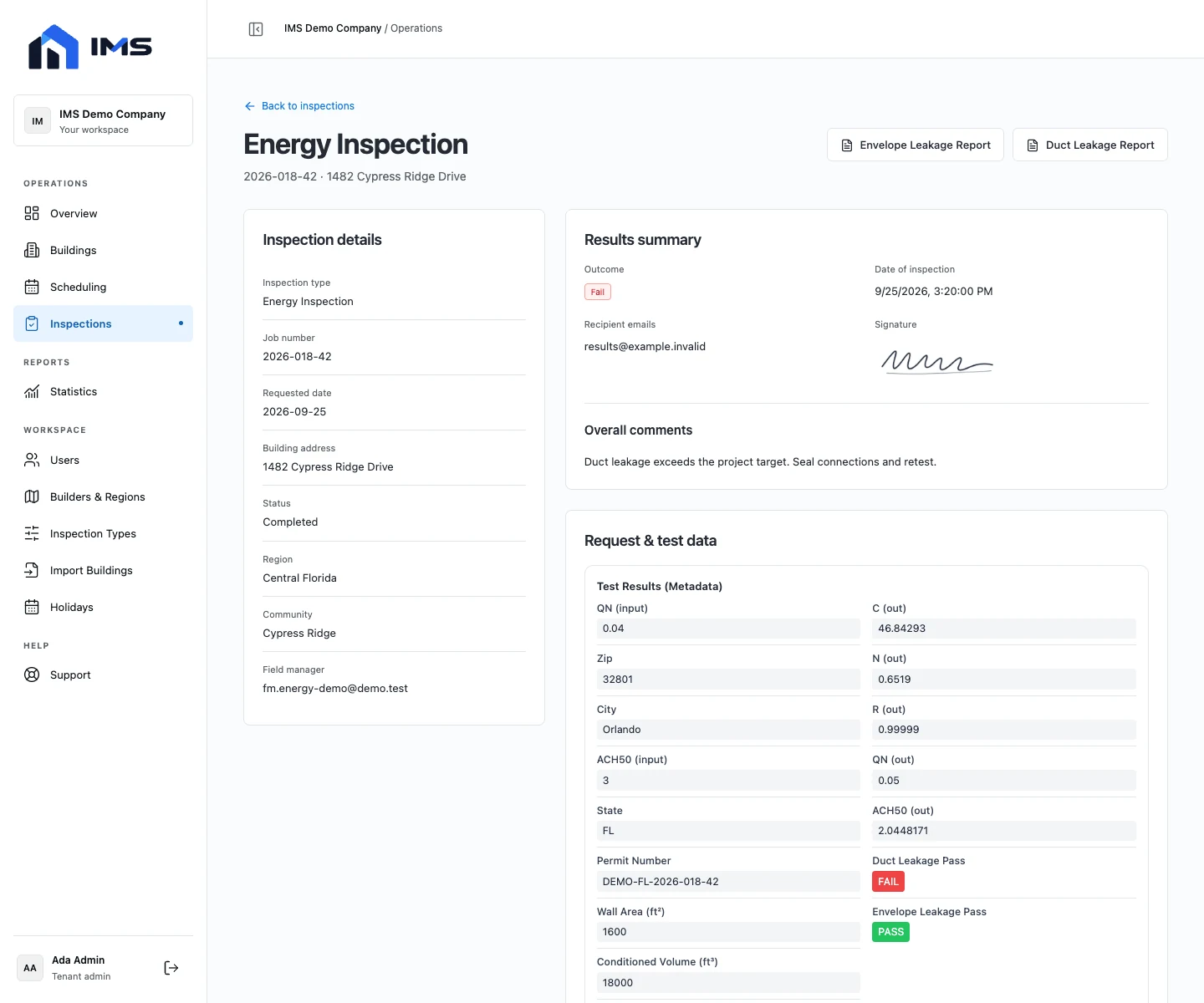
IMS belongs to TechToYou LLC. The screen shown uses synthetic demonstration data.
Start with one process you need to improve.
You do not need a finished software specification to begin. A description of the work, the people involved, and where it becomes difficult gives us a starting point. The process below adapts to the needs of each project.
Understand the work.
We look at what starts the process, who handles each step, which information they use, and what happens when something falls outside the usual path.
Define the scope and user experience.
We define the core workflow, users, permissions, and connections, then shape the user experience (UX) and interface (UI). Together, these decisions establish what the first version includes, how people will use it, and what can follow later.
Build and check the workflow.
We develop the application around the agreed scope and design, then check the main steps, access rules, and exceptions against the requirements.
Plan for release and ongoing use.
We plan the release and what the software needs for ongoing use. Through our collaboration with TechToYou LLC, we can also arrange hosting, maintenance, and ongoing support. These services are scoped and agreed separately from software development, case by case.
How much does custom software development cost?
A meaningful estimate needs a defined scope. A tool for one team handling one workflow involves different work from a platform with several user roles, a mobile app, and connections to other systems.
The main factors include:
- Workflows and exceptions: what the application must handle, including the cases that need a different path.
- Users and access: who uses it and what each person can see or change.
- Data: what needs to be collected, cleaned, imported, or moved from an existing system.
- Integrations: which tools it connects to and what their interfaces allow.
- Platforms and ongoing operation: web or mobile requirements, hosting, external services, and maintenance.
A clear proposal separates the work required to deliver the first version from recurring services and future changes. Starting with a focused workflow helps make those choices easier to evaluate.
See how we approach a project, what we consider in a proposal, and what you can prepare before getting in touch.
Plan your software project →Questions before starting.
Do I need a complete specification?
No. You can start by explaining what the team does today, which tools it uses, and where the process breaks down. Screenshots, an example spreadsheet, or a description of a recent task can help explain the need. Detailed requirements can be developed from that starting point.
Is custom software suitable for a small business?
It can be, when a specific operational need justifies the development and ongoing cost. The decision depends on the process, its frequency, the people involved, and whether an existing product can do the job. A focused internal tool may be enough; the scope does not have to begin with a company-wide platform.
Can the application work with our existing tools?
It may be possible, depending on their APIs, export options, permissions, and licensing. The first step is identifying which information needs to move and what each tool allows. Those findings help define the integration work and any limitations.
How long does development take?
The timeline depends on the scope, integrations, data preparation, and review needed for the first version. We need to understand those requirements before proposing a schedule. A focused first release can be planned separately from later additions.
What happens after launch?
We can arrange hosting, maintenance, and ongoing technical support through our collaboration with TechToYou LLC, an independent business providing managed IT, infrastructure, cloud services, and security. The setup is agreed case by case, with responsibilities, included services, and costs defined separately from software development. Learn how Bisanti and TechToYou work together →
Who owns the software?
Ownership and licensing are defined in the project agreement. They should cover the deliverables, source code, access, and any third-party components or services the application relies on. These terms need to be clear before development begins.
LET’S TALK THROUGH THE WORK
Tell us what your team needs to manage.
What starts the work? Who handles it? Where does it become difficult?
Tell us which tools you use today and what you would like to improve. If you already have a detailed specification, we start by reviewing it to assess feasibility. In most cases, the next step is an introductory call to understand your process, goals, and what is feasible.
You don’t need a finished brief to get started.